

5.7K
Downloads
104
Episodes
Episodes
Aug 1, 2026
Aug 1, 2026
4 min
Shame
The Darkness in Broad Daylight
Our evolving relationship with shame is challenging societal norms. Understanding how shame influences our lives and the world is crucial to creating a more just and peaceful society.
July 2025
Understanding Shame: Its Role and Impact in Society and the Individual
Caroline Phipps explores the complex nature of shame, emphasizing its dual role as both a foundational ethical compass and a tool often misused to control and divide societies. It highlights the importance of distinguishing between healthy shame, which fosters accountability and spirituality, and weaponized shame, which isolates and harms individuals and communities. Ultimately, the speaker advocates for using shame constructively as a guide towards a more just and compassionate world.
1. The Dual Nature of Shame
Shame is a powerful emotion that significantly influences our behavior and social structures. It serves both personal and societal functions, sometimes promoting healthy self-awareness and at other times enforcing harmful social control.
- Healthy shame is essential to the foundation of spirituality and personal conscience. It helps individuals stay grounded and accountable.
- Shame can provoke a strong desire to disappear or hide, often rooted in early life experiences or personal trauma.
- Historically, shame helped early human societies maintain cohesion by encouraging conformity and discouraging behaviors that might lead to social exclusion.
- In many religions and ancient narratives, shame is portrayed as a potent force that shapes moral behavior, as in the story of Adam and Eve or in the valor of warriors who fear shame more than death.
- Weaponized shame is used to control and divide people by social class, race, or sexual orientation, exploiting fear and stigma.
2. Personal Experience and Emotional Impact
The speaker shares a personal anecdote that demonstrates how shame can become deeply ingrained through early negative experiences and continue to affect daily life and emotional well-being.
- The example of a math teacher humiliating her by making her stand on a desk emphasizes how shame can cause lasting psychological effects, such as anxiety and avoidance behaviors.
- This illustrates how personal memories of shame contribute to ongoing emotional struggles, such as fear or physical symptoms (e.g., sweaty palms).
3. Societal Shifts in Shame and Accountability
The video describes how public perception and the consequences of shame have evolved in modern times, highlighting both risks and opportunities.
- Public shaming historically could end careers and have serious social repercussions, but today some individuals seem immune to these consequences, which can erode social accountability.
- The decline in fear of shame may lead to a loss of decency, accountability, and trust within communities.
- On the positive side, more people are breaking the silence about shame surrounding situations beyond their control (e.g., trauma, discrimination), which is recognized as progress toward healing and justice.
4. A Call for Conscious Use of Shame
The speaker urges a mindful and empowering approach to shame, recognizing both its power and pitfalls.
- Individuals should distinguish between shame rooted in their own conscience and shame imposed by external manipulation.
- Healthy shame can function as a compass for integrity, while weaponized shame should be rejected because it darkens lives and divides people.
- The ultimate goal is to use shame as a constructive guide, not as a weapon against others, fostering kindness, justice, and inner dignity.
5. Summary of Key Insights
| Aspect | Insight |
|---|---|
| Definition of Shame | A fundamental emotional experience linked to self-awareness, social norms, and spirituality. |
| Historical Role | Maintained social order by encouraging conformity and preventing exclusion in early societies. |
| Psychological Impact | Can cause lasting trauma and anxiety when weaponized or experienced harshly in childhood. |
| Modern Dynamics | Public shaming consequences have lessened; some are immune, risking erosion of societal accountability. |
| Positive Trends | Increased openness about shame related to uncontrollable circumstances boosts societal healing and justice. |
| Ethical Guidance | Use shame to remain grounded personally; reject its use as a tool of control or division. |
6. Practical Guidance
- Recognize your feelings of shame and identify whether they are healthy (linked to your conscience) or weaponized (imposed by others).
- Avoid silencing yourself when shame is undeserved or used to manipulate.
- Promote conversations about shame to transform it from isolation into shared understanding and growth.
- Foster communities where dignity and grace prevail over fear and exclusion.
The video ultimately emphasizes shame’s complexity and urges transforming its role from division to connection, underpinning a more just and peaceful society through conscious emotional awareness and social accountability.

Jul 29, 2026
Jul 29, 2026
17 min
Us and Them
What’s Your Agenda?
The lines between “us” and “them” are drawn by programming, never by nature. There is no “us” and “them,” only “we.”
You’ve got to be taught to hate and fear,
You’ve got to be taught from year to year,
It’s got to be drummed in your dear little ear—
You’ve got to be carefully taught!
Rodgers and Hammerstein
You’ve Got to Be Carefully Taught
Aired on 23rd - 9 am
on WKZE 98.1 FM - Red Hook, NY
Up & Running Morning Show with DJ Rick Schneider
The Power of Shared Experiences: Living with Inner Elegance
This conversation between Caroline Phipps and DJ Rick Schneider centers on the profound impact of coming together as a community to create shared positive experiences. Drawing from music, cultural observations, and personal stories, they explore how collective energy and openness foster connection, reduce divisiveness, and nurture empathy in a complex world.
1. The Dynamics of Shared Musical Experiences
Caroline and Rick discuss how live music exemplifies the power of coming together, emphasizing the blurred lines between performers and audience as both contribute to a unified, memorable event.
- Being both performer and listener creates a **shared energetic loop** — bands feed off the audience’s response and vice versa.
- This reciprocal energy transforms a concert into a **unifying experience** where the boundary between “us and them” dissolves.
- Regardless of the audience size, a committed band delivers their best, and the experience resonates equally.
- Rick highlights the role of a host as a **connector or peacemaker**, introducing the band to the audience and encouraging collective enjoyment.
- Music concerts show how people can **bury divisions** and simply enjoy a joint moment without external judgments.
2. Human Connection Beyond Division
The dialogue expands beyond music to the broader theme of togetherness, counteracting divisive, simplistic “us vs. them” narratives pervasive in society.
- Caroline notes that humans are **biologically wired for connection**, which feels deeply good when collective harmony occurs.
- Babies enter the world with unique personalities but are shaped by environment, culture, family influences, and social programming.
- Rick shares a nostalgic reflection on growing up watching Western TV shows, illustrating how cultural narratives shape perceptions of groups and conflict.
- Personal friendship with someone from Siberia challenged Caroline’s childhood fears about the Soviet Union, showcasing how **getting to know individuals humanizes “others.”**
- The duo stress that **labels and stereotypes obscure the diverse realities of individuals.** People everywhere show kindness, judgment, openness, and fear in different measures.
- Access to global information today enables us to see complexities and vulnerabilities across cultures, inviting a more empathetic worldview.
- Opening one’s mind beyond programmed beliefs fosters understanding and reduces fear.
3. Everyday Applications of Shared Respect and Openness
The hosts explore how the principles of shared musical experiences and human connection can be extended to daily life, improving community and interpersonal relations.
- In everyday settings like banks or stores, simple recognition of shared humanity can help build bonds.
- Engaging in conversations and appreciating others beyond surface differences reveals **more commonality than difference.**
- Collective public events like the World Cup demonstrate large-scale examples of people coming together to cheer, support, and celebrate, transcending national or cultural divides.
- Caroline emphasizes that the essence of music and sports is about **joyful participation together**, a model for everyday interactions.
- This shared joy and openness encourage a culture of kindness, support, and positive energy in a fast-paced, chaotic world.
4. Living with Inner Elegance Initiative and Community Building
Caroline Phipps presents her ongoing initiative, “Living with Inner Elegance,” as a platform to foster such connections and shared experiences in safe, supportive environments.
- The initiative offers **Safe Space Community Zoom gatherings** where people can come together to share, listen, and support one another with dignity and grace.
- These virtual events encourage both active participation and quiet presence, welcoming diverse comfort levels.
- The upcoming event (mentioned as July 28th, *Date is contextual and may be outdated*) aims to gather an inspiring group focused on mutual understanding and compassionate dialogue.
- Information and registration are available at **carolinephipps.com**, with a free and accessible entry point.
- The program’s core is to empower people to co-create **effective solutions** to life’s challenges through collective empathy and respect.
---
Key Insights
- Shared experiences, especially in music and sports, forge a powerful sense of community that transcends divisions.**
- The energy exchange between performers and audience creates a unique collective phenomenon of unity.
- Human beings are inherently social and benefit biologically and emotionally from connection.
- Cultural programming and stereotypes often distort perceptions of “the other,” but personal connection reveals complexity and shared humanity.
- Everyday life can mirror concert or sports energy by embracing openness, kindness, and shared respect.
- Programs like Living with Inner Elegance provide spaces to nurture these connections consciously, offering a sanctuary from the world’s divisions.
Summary Table: Roles in a Musical Shared Experience
| Role | Function | Contribution to Shared Experience |
|---|---|---|
| Band Members | Perform music, set tone and energy | Provide artistic expression and engagement |
| Audience | Listen, respond, and energize | Feedback loop fuels performer energy |
| Host/Announcer | Introduce and unify band and audience, create inclusivity | Facilitate connection and positive atmosphere |
Summary Table: Factors Influencing Human Connection and Division
| Factor | Description | Impact on Connection/Division |
|---|---|---|
| Biological Wiring | Humans’ innate need to connect and be part of groups | Promotes feelings of unity and well-being |
| Cultural Programming | Societal media, upbringing, stereotypes | Can create “us vs. them” narratives, foster bias |
| Personal Interactions | Individual friendships and conversations | Humanizes others, reduces fear and division |
| Access to Info | Modern technology and global awareness | Increases empathy through understanding |
The conversation between Caroline Phipps and Rick Schneider highlights the importance of embracing collective experiences and open-mindedness as antidotes to societal division. Music, sports, and intentional community spaces embody how shared energy and empathy can elevate our personal and communal lives, cultivating inner elegance through kindness and connection.
Caroline Phipps
Living With Inner Elegance
www.carolinephipps.com
A Caroline Phipps event:
LIVING WITH INNER ELEGANCE SAFE SPACE COMMUNITY
A Zoom-based gathering
Every last Tuesday of the month
The Living With Inner Elegance Community now has a Safe Space.
Once a month, the community will meet via Zoom for anyone seeking real connection, practical solutions, and a little more calm amid the chaos.
To know more, click here: carolinephipps.com/safespace-register

Jul 15, 2026
Jul 15, 2026
18 min
Episode notes
What if the power you've been searching for outside yourself has quietly been programmed out of you, and the work of a lifetime is to reclaim it?
In this episode of The Soulful Catalyst, I'm joined by Caroline Phipps, Founder of Living With Inner Elegance. Caroline is also a Writer, Speaker, Radio and Podcast Personality, Film Producer and Life Coach, whose journey was shaped by overcoming personal adversity.
Out of that came the Living With Inner Elegance Initiative, a safe space where people unite with dignity and grace to craft genuine, practical solutions to the demanding problems of our fast-paced, chaotic world.
What struck me most in this conversation is how simply Caroline names the work in front of us.
The biggest project any of us has on this planet, she says, is our own development. Because when we understand ourselves better, we have more agency. We stop outsourcing our answers and our strength. And we begin to make choices that are actually ours.
Caroline believes we're living through a major spiritual transition, and that the temptation of our time is what she calls the quick fix of separatism. Someone else to blame. Someone else's fault.
She offers a different path, one grounded in interconnectedness, personal responsibility, and a beautifully practical concept she describes as "the elegant space." That gap you can put between the stimulus and your response, where mindset changes and better choices become possible.
In this episode we explore:
➤ Why your own development is the biggest project you'll ever undertake, and what shifts when you stop looking outside yourself for the answers
➤ The elegant space, that gap Caroline teaches between what triggers you and how you choose to respond, where real change actually lives
➤ Being grounded and elevated at the same time, and what it looks like to change your mindset so you can change your life
➤ The quick fix of separatism, why it's being offered to all of us right now, and the cost of taking it
➤ The shift from I to we, and Caroline's belief that this is where the seeds of real change are planted
This episode is for anyone who senses that a piece is missing, that things feel disconnected, and that the answer isn't in one more course or quick fix but in reclaiming the agency that's always been theirs.
Connect with Caroline Phipps
Website: carolinephipps.comInstagram: @caroline.phippsLinkedIn: Caroline PhippsFacebook: Caroline PhippsSubstack: @carolinephipps1
Connect with Joanna Ingram
Website: joannaingram.comInstagram: @iamjo.ingram
LnkedIn: Joanna Ingram
Messaging Impact Audit: Get a personalised review of your messaging using my six-pillar framework, plus a clear report with your scores, gaps, and the opportunities you're missing to attract higher-frequency clients.
Book here: joannaingram.link/audit.
Want to be a guest on The Soulful Catalyst?
If you're a coach, healer, or spiritual expert doing powerful work that transforms lives, and you'd love to share your story and methods with a global audience, I'd love to hear from you.
👉 Apply here: go.joannaingram.com/soulfulcatalyst
Jun 23, 2026
Jun 23, 2026
24 min
Aired on June 23rd 2026 - 9 AM
Summary of the Conversation: "Living with Inner Elegance – Embracing Change"
Caroline Phipps, founder of Living with Inner Elegance, engages in a thoughtful dialogue with DJ Rick Schneider on the dynamics of change in today’s fast-paced, interconnected world. The conversation explores how persistent change influences our mental and emotional states, the challenges it presents, and strategies for adapting gracefully.
Key Insights
-
Change is constant and accelerating: Caroline highlights that modern society faces change more rapidly than any previous generation due to technological advances and global connectivity. What once took centuries to evolve now happens in minutes or seconds.
-
Emotional responses to change are complex and varied: Change often evokes fear, anxiety, excitement, and pride simultaneously. For example, Rick shares the story of his daughter Eva's transition from elementary to middle school, exemplifying the mixed emotions that such transitions spark.
-
Mental chatter and unconscious thoughts dominate our awareness:
- Up to 90% of daily thoughts are unconscious or irrelevant to present circumstances.
- These spontaneous mental patterns often contribute to internal stress and emotional volatility.
- Caroline recommends practicing awareness by verbalizing thoughts aloud to observe their randomness and reduce their impact.
-
Change affects physiology and mindset: Thoughts and memories, even negative or anxiety-inducing ones, can rapidly alter our physical state, influencing how we feel moment-to-moment.
-
Durable adaptability is crucial:
- This concept implies developing resilience and flexibility while being compassionate toward oneself.
- Recognizing fear and self-criticism as natural but not letting them dominate responses to change.
- Aligning actions with one’s true values and authentic self, rather than with external expectations, strengthens adaptability.
-
Avoidance of change limits growth: Avoiding or denying change drains energy and closes off opportunities for support, solutions, and personal growth that naturally accompany transitions.
-
Meaning versus happiness:
- The pursuit of meaning in life, rather than transient happiness, fosters a greater ability to cope with change.
- Finding purpose in transformation helps frame change as an opportunity rather than a burden.
-
The only real control is internal:
- While external circumstances are unpredictable and ever-shifting, focusing on internal responses equips individuals to handle change better.
- Caroline stresses the importance of self-awareness in navigating the emotional "roller coaster" of change.
Practical Strategies for Navigating Change
-
Awareness exercises:
- Observe and verbalize spontaneous thoughts to reduce their power.
- Build mindfulness of mental chatter and emotional shifts.
-
Self-compassion:
- Accept fear and vulnerability as normal responses.
- Avoid harsh self-judgment during transitions.
-
Authenticity:
- Align actions with your personal values and authentic self rather than external roles or personas.
- Recognize when public personas conflict with inner truths, which weakens resilience.
-
Face fear rather than avoid it:
- Embracing change sooner rather than avoiding it helps you access resources and support.
- Prolonged avoidance can exacerbate anxiety and reduce adaptability.
-
Seek meaning in change:
- Focus on the purpose and learning inherent in transformations to foster emotional strength.
-
Focus on internal control:
- Accept that while you cannot control external events, managing your response is key to resilience.
-
- The conversation underscores that change is an inherent part of life, speeding up in today’s world. Our collective challenge is to develop durable adaptability—a balanced blend of resilience, compassion, and authenticity—as change often triggers fear and discomfort. By cultivating self-awareness, facing fears directly, and seeking meaning beyond transient happiness, individuals can better navigate uncertainties with grace. The Living with Inner Elegance initiative offers practical support and a community space for handling these universal challenges in a dignified and effective way.
- Website: carolinephipps.com
- Email: caroline@carolinephipps.com
- Radio Show: WKZE 98.1 FM – Up & Running Morning Show with DJ Rick Schneider
May 26, 2026
May 26, 2026
22 min
Summary: Understanding the Ego – Insights from Caroline Phipps
Caroline Phipps joined the Up and Running Morning Show to discuss the concept of the ego, its origins, functions, and impact on human behavior and relationships. The conversation explored why everyone has an ego, how it shapes our perceptions, and the challenges it can create both personally and socially.
Core Concepts & Key Insights
-
Definition and Role of the Ego:
- The ego is described as a lens through which individuals see themselves and the world around them.
- It functions as an early warning system, designed to protect the self by detecting threats such as rejection, betrayal, or failure.
- According to Carl Jung, the ego is "the center of consciousness", representing awareness and defining personal identity and values.
-
Origins of the Ego and Separation:
- Early human consciousness includes this distinct sense of “me vs. others”, creating psychological separation despite physical co-existence.
- This leads to unique individual experiences, with each person perceiving the world differently, which explains feelings of connection or alienation.
-
Ego’s Voice and Its Impact:
- The “ego voice” is the internal dialogue constantly evaluating potential dangers and outcomes.
- This voice can dominate perception, especially when fearful or consumed, making people believe their personal version of events is the absolute reality.
- Plato’s cave analogy illustrates how a strong ego limits perception to shadows on a wall—symbolizing narrow, subjective understanding.
- The Buddha’s idea of life as an illusion is connected to this phenomenon, where perceived realities are distorted by ego-driven narratives.
-
Inflated vs. Healthy Ego:
- An inflated ego arises when individuals tie their self-worth to external validation, achievements, and social status.
- This inflated sense of self encourages boastfulness, arrogance, defensiveness, and an inability to empathize or accept other viewpoints.
- Conversely, some people maintain a modest, secure ego grounded in internal value, which fosters humility and collaborative interaction.
-
Social and Historical Consequences:
- Unchecked egos in leadership or power can create chaos due to their single-story mindset and lack of compassion.
- Such egos demand constant admiration, fear failure, and resist accountability, which can harm collective well-being.
-
Managing the Ego:
- Developing a healthy relationship with the ego is crucial for personal well-being and social harmony.
- Practicing humility reduces arrogance and defensiveness, making it easier to integrate others’ ideas and collaborate.
- Self-worth should be anchored in self-belief rather than external validation.
- Daily reflection on one’s strengths, values, and contributions can reinforce a grounded sense of self.
Important Analogies & References
| Concept | Explanation |
|---|---|
| Plato’s Cave Allegory | Ego limits perception to shadows, preventing awareness of fuller reality beyond personal views. |
| Carl Jung’s Model of Psyche | Ego as the center of consciousness, shaping self-awareness and values. |
| Buddha’s Illusion Concept | Life’s concrete events feel real, but ego-driven interpretations can create illusory suffering or meaning. |
Key Takeaways
- The ego is a natural, protective mechanism, but can distort reality and relationships when unchecked.
- Recognizing the ego’s narratives and practicing humility helps foster empathy and collaborative problem-solving.
- True self-worth comes from internal validation rather than external praise.
- Awareness of the ego’s role enhances both personal growth and the quality of social interaction.
Additional Notes
- The program's podcast has a global reach, with Vietnam emerging as its second-largest audience outside the U.S. (Not specified beyond that).
- Caroline emphasizes the importance of being mindful of the ego’s "voice" and cultivating humility to create healthier social environments.
Caroline Phipps
Living With Inner Elegance
carolinephipps.com
Apr 21, 2026
Apr 21, 2026
22 min
Summary of "Living with Inner Elegance" Radio Show Featuring Caroline Phipps and DJ Rick Schneider
Caroline Phipps and Rick Schneider engage in a thoughtful conversation about the complexities of modern life and the importance of personal responsibility, spiritual awareness, and universal laws for navigating dark times. The discussion emphasizes inner light, human connection, and the evolving nature of the human condition in a global context.
Key Themes and Insights
-
Human Evolution and Compassion
Caroline reflects on history, noting that despite past brutality (e.g., monarchs in English history), humanity has generally evolved toward greater kindness, compassion, and inclusivity. She references Martin Luther King Jr.’s famous phrase:“The arc of the moral universe is long, but it bends towards justice.”
This offers comfort that progress, though slow and met with pushback, is ongoing. -
Pushback Against Progress
Every step toward social harmony and justice faces resistance. Technological and scientific advances can be double-edged—used either to help or to control. This tension is part of human experience. -
Global Interconnectedness
The conversation highlights that we are a global family, sharing one planet with no visible borders when viewed from space (as illustrated by the Artemis astronauts’ perspective). This reflects the universal truth of interconnection, scientifically and philosophically proven. -
The Role of Light Workers
As light keepers, individuals have the choice and responsibility to bring light into darkness, rather than contribute to negativity. Caroline encourages listeners to avoid wallowing in darkness and instead choose to lighten the moment with positivity and presence. -
Feeling Overwhelmed and Personal Agency
Many feel powerless due to global challenges. Caroline offers a guiding principle:- Humans are governed by three sets of laws:
- Human-made laws (societal, religious, legislative) — variable and sometimes conflicting.
- Personal choice — the individual’s decision to carry light or not, independent of external circumstances.
- Universal laws — immutable, infinite, and outside human control, but governing all life.
- Humans are governed by three sets of laws:
-
Universal Laws Explored
Caroline highlights three key universal laws that shape human experience:Universal Law Description Implication We Are All Connected Humans and the universe are deeply interconnected at a molecular and existential level. No group is superior or inferior; we share a collective existence and impact each other. Change is Constant Everything in the universe is in continuous flux, including human beings. Acceptance of change is vital; dwelling on past states or resisting change wastes potential. Cause and Effect (Karma) Every action has an equal and opposite reaction, mirrored in physics (Newton’s Third Law) and spirituality. Actions inevitably produce consequences; positive acts often yield positive returns. -
Presence and Forgiveness
Staying present is critical. Holding onto past grievances or resentment hinders the ability to bring light to the present moment, undermining progress and healing. -
Spiritual Crisis and Awakening
Caroline describes the current global moment as a spiritual crisis and transformation, where more people recognize universal truths, fostering community systems of mutual support and shared responsibility. -
Sustainability of Light
Aligning with universal laws and spiritual nature is likened to tapping into a sustainable, infinite source of energy, akin to solar power—always available and never depleted. -
Encouragement to Act Now
The present moment is emphasized as the only time for choice and action. Dwelling on the past or worrying excessively about the future dissipates potential and purpose.
Conclusion
The dialogue between Caroline Phipps and Rick Schneider offers a hopeful, spiritually grounded framework for living with inner elegance amid global challenges. It encourages individuals to:
- Embrace personal responsibility in carrying light
- Recognize and align with immutable universal laws
- Appreciate human interconnectedness and constant change
- Cultivate presence and forgiveness to illuminate the path forward
This perspective fosters resilience, compassion, and a sense of shared humanity in turbulent times.
Keywords
Inner light, light worker, universal laws, interconnectedness, change, cause and effect, karma, spiritual crisis, presence, compassion, global family, personal responsibility, resilience.
Contact and Additional Information
- Caroline Phipps’s website: carolinephipps.com
- Email for consultations and questions: caroline@carolinephipps.com
- The "Living with Inner Elegance" initiative aims to create a dignified, graceful space for authentic solutions in a complex world.
Mar 27, 2026
Mar 27, 2026
25 min
Summary: Understanding and Overcoming Fear in Modern Life
Caroline Phipps, founder of Living with Inner Elegance, joined the Up and Running Morning Show to discuss the pervasive nature of fear in today’s world, especially in the context of rapid technological change and the aftermath of the pandemic. Their conversation highlighted the biological, psychological, and societal dimensions of fear, as well as practical approaches to managing it.
Key Themes and Insights
-
Increased Fear in Modern Society
- Studies indicate that people today experience more fear than ever, despite advanced technological, medical, and legislative protections aimed at safety.
- The COVID-19 pandemic intensified collective fear, triggering widespread anxiety as the world faced an unknown threat.
- The constant bombardment of global news and social media amplifies fear by exposing individuals repeatedly to distressing events, creating lasting fear responses.
-
Fear as a Biological Response
- Fear evolved as a survival mechanism when humans faced immediate physical threats (e.g., predators, intergroup conflict).
- Physiological effects include:
- Pupil dilation
- Accelerated breathing
- Adrenaline surge
- This response enables fight, flight, or freeze reactions crucial for survival, exemplified by extraordinary feats like lifting heavy objects in emergencies.
-
Modern Manifestations of Fear
Fear today often triggers less physical but still impactful behaviors:- Freeze: Paralysis or procrastination in decision-making and action.
- Fawn: People may comply or suppress their own needs to avoid conflict or rejection, sometimes compromising personal integrity.
- Flee: Social withdrawal, isolation, or substance use as escape mechanisms.
- Fight: Aggression or blame-shifting to protect oneself from perceived victimization.
-
Fear’s Role in Society and Commerce
- Fear is often exploited for control and profit, such as marketing products or security measures by emphasizing potential dangers.
- Examples include medication advertisements that focus heavily on side effects, or security technologies like airport facial recognition that can evoke unease.
-
Childhood Development and Persistent Fears
- Early-life experiences shape fears, such as childhood fears of spiders, which can persist into adulthood despite rational knowledge.
- Parents play a crucial role in managing children’s fears by balancing protection with calm reassurance.
Practical Strategies to Manage Fear
-
Identify and Understand Your Fears
- Make a list of personal fears and explore the underlying insecurities or confidence gaps they reveal.
- Awareness helps reduce the power fear holds and clarifies what specific emotions or beliefs fuel it.
-
Limit Exposure to Fear-Inducing Media
- Reduce "doom-scrolling" on social media and news to prevent constant fear reinforcement.
- Surround yourself with inspirational people and content to foster positivity and courage.
-
Take Incremental Steps to Face Fear
- Start with small, manageable actions toward confronting fears (e.g., making one phone call, attending an event).
- Each successful step builds resilience and makes future challenges easier to face.
- Caroline emphasizes the importance of not overwhelming oneself but building courage gradually.
-
Embrace Courage and Growth
- Paraphrasing Martin Luther King Jr., fear is necessary for growth, but it must not dominate life.
- Overcoming fear unlocks potential, creativity, and meaningful connections.
- Taking risks, such as pursuing romance despite fear, can lead to rewarding experiences.
-
Encouraging Perspective
- Over 85% of worries never materialize, and people often handle difficulties better than expected.
- This perspective can diminish the intensity of fear and motivate action.
Quantitative/Statistical Insight
| Statistic | Detail |
|---|---|
| 85% | Percentage of worries that never actually happen, according to studies mentioned by Caroline. |
Contact and Resources
- Caroline Phipps offers support through:
- Email: caroline@carolinephipps.comcaroline@carolinephipps.com
- Website: carolinephipps.com — contains articles, podcasts, videos, and archives.
- The Up and Running Morning Show has a growing international audience, notably strong in the United States and Japan.
Conclusion
Fear remains a powerful, innate mechanism but is often misaligned with the modern world’s challenges. Understanding its biological roots and psychological impacts, alongside deliberate, small steps toward confronting fears, can foster resilience and personal growth. Caroline Phipps advocates for awareness, measured action, and surrounding oneself with positivity to overcome fear’s limiting effects and unlock individual potential.
Feb 27, 2026
Feb 27, 2026
20 min
New Beginnings
Resolutions To Transform Your Life
With Caroline Phipps and DJ Rick Schneider
Aired on Friday, February 27, 2026
This segment from the Up and Running Morning Show on 98.1 KZE features Caroline Phipps, founder of Living with Inner Elegance, in a monthly conversation with DJ Rick Schneider. The discussion centers on personal growth, the significance of the Chinese zodiac’s Year of the Fire Horse, and the pitfalls of New Year’s resolutions, culminating in a call for mindful self-awareness and presence.
Caroline explains the meaning of the Fire Horse (an animal-element pairing that last occurred in 1966), describing its themes of passion, leadership, independence, and adventure, while reminding listeners to harness that energy with clarity and discipline. She connects the astrological moment to broader cultural shifts and the personal potential for fresh beginnings.
The hosts dig into the perennial topic of New Year’s resolutions: why so many fail, how thinking alone won’t create lasting change (quoting Einstein), and the pitfalls of guilt-driven, all-or-nothing promises like dry January or impulse gym sign-ups. Caroline reframes the solution: instead of external fixes, make a single inner resolution to observe and engage with yourself more skillfully.
Key practical takeaways include naming and noticing your “saboteur” voice, creating a pause or gap before reacting, checking in with how you truly feel, and choosing disciplined, present responses over autopilot habits. Caroline offers concrete ways to step out of habitual patterns — especially when fear, anger, or self-doubt try to hijack decisions — and emphasizes that small, conscious choices in real time compound into real transformation.
Ultimately, the episode is an invitation to treat personal development as a sacred obligation: show up, be present, and grow so you can better serve others. Caroline and Rick close with a call to co-create a kinder world and celebrate that every moment offers a new beginning.
How to connect: listeners are invited to email Caroline at caroline@carolinephipps.com and visit carolinephipps.com to access a growing archive of videos, podcasts and articles. Caroline is offering a chance to win a free consultation for one lucky person who reaches out — a practical next step for anyone ready to transform resolutions into real change.
Key Themes and Insights
- Chinese Zodiac and the Year of the Fire Horse:
- The Chinese zodiac combines 12 animals with 5 elements (wood, fire, earth, metal, water), cycling every 60 years.
- 2024 marks the Year of the Fire Horse, last seen in 1966, a year noted for significant social, political, and cultural upheaval.
- The Fire Horse symbolizes passion, leadership, adventure, energy, and independence, suggesting a period of transformation and new beginnings.
- The previous year was the Wood Snake, associated with shedding the old and embracing the new, reinforcing a theme of renewal.
- Reflection on New Year’s Resolutions:
-
-
- Resolutions are often made under exhaustion and pressure, focusing on weight loss, fitness, finances, or abstinence (e.g., Dry January).
- Many resolutions fail because they rely on the same mindset that created the original problems.
- Quoting Albert Einstein: “We cannot solve our problems with the same thinking that created them.”
- Failed resolutions often lead to disappointment and self-sabotage, fueling negative coping behaviors.
-
-
The Only Necessary Resolution – Self-Observation:
- Caroline advocates for a single, profound resolution: to take ourselves on by becoming aware of the internal duality between the “saboteur voice” and our higher self.
- The saboteur voice tempts procrastination, indulgence, and self-doubt, while the conscious self strives for discipline, clarity, and growth.
- Recognizing and creating space between stimulus and reaction helps avoid autopilot behaviors and regrettable actions.
- Self-awareness involves examining past fears, current resistance, and future anxieties, which often hinder change.
- Being present and mindful allows us to embrace change as an opportunity for growth rather than a threat.
-
Importance of Presence and Mindfulness:
- Growth requires showing up fully in the present moment, letting go of past regrets and future catastrophizing.
- Emotional triggers (fear, anger) can lead to reactive behaviors unless observed with mindful distance.
- Every moment is a new beginning, offering a chance to transform thoughts, words, and deeds.
-
Community and Collective Growth:
- Personal development is framed as a sacred obligation, enabling individuals to uplift others.
- Collective improvement thrives when individuals come together with dignity and grace, co-creating a better world.
- The alignment of planetary events metaphorically supports this period of transformation.
Practical Advice and Recommendations
- Avoid relying solely on traditional resolutions; instead, focus on self-awareness and observing internal dialogues.
- Create mental space between impulse and reaction to prevent destructive habitual patterns.
- Recognize and challenge the saboteur voice with compassion and clarity.
- Embrace change as a positive force, not a threat, to enable personal and collective growth.
- Engage with communities and resources like Living with Inner Elegance for ongoing support and inspiration.
Conclusion
The conversation with Caroline Phipps emphasizes that true transformation begins with mindful self-observation and presence, rather than external resolutions. The symbolic Year of the Fire Horse invites individuals to harness their inner passion and leadership with clarity and discipline. By understanding and managing the internal saboteur, people can break free from destructive cycles and contribute positively to themselves and the broader community. The Living with Inner Elegance initiative provides a supportive framework for this journey of personal and collective evolution.
Contact and Resources
- Caroline Phipps’ Website: carolinephipps.com
- Access to videos, podcasts, articles, and archives of past radio segments.
- Offers coaching sessions focused on new beginnings and life transformation.
- Email: caroline@carolinephipps.com
- Opportunity for listeners to reach out and possibly receive a free consultation.
Dec 22, 2025
Dec 22, 2025
21 min
Fate vs. Destiny
Is What It Is What It Is?
Aired on Monday, December 22, 9AM
In this episode of the Up and Running Morning Show, host Rick chats with Caroline Phipps, founder of Living with Inner Elegance, about the big, timely topic of fate versus destiny. As the winter solstice and holiday season approach, they explore how people interpret the circumstances they’re born into, whether life is fixed by fate, or whether we can shape our own destiny through choices and actions.
Caroline and Rick unpack definitions and contrasts—fate as what happens to us and destiny as what we do with it—bringing in thoughtful quotes (including Voltaire), historical examples (Winston Churchill, Abraham Lincoln, Martin Luther King Jr., Nelson Mandela), and complex cases like the Dalai Lama and the dangerous side of delusional destiny seen in figures such as Hitler, Stalin, and Jim Jones.
The conversation moves to practical: how to influence your future, build emotional self-discipline, and create space between events and reactions. Caroline offers steps listeners can practice—pausing before reacting, strengthening the mental “muscle” of response, cultivating kindness and conscience, and choosing actions that uplift others. Rick and Caroline emphasize empathy, responsibility, and mindful choices as ways to transcend challenging circumstances.
Listeners can expect an uplifting, reflective discussion with real-life examples, gentle guidance for holiday stress and relationships, and actionable tips for developing resilience and purpose. Caroline shares seasonal plans and ways to connect—she’ll be visiting the Renaissance Rehabilitation Center in Staatsburg, NY, on Christmas Day—and invites listeners to reach her at caroline@carolinephipps.com or explore archives at carolinephipps.com for past episodes and resources.
carolinephipps.com
Nov 24, 2025
Nov 24, 2025
19 min
Join Rick on the Up and Running Morning Show (98.1 KZE) for a thoughtful Thanksgiving-week conversation with monthly guest Caroline Phipps. In this episode, Caroline explores the surprising rise of boredom despite the constant access to information and entertainment, and offers practical insight into how solitude, reflection, and choice can become powerful tools for creativity and well‑being.
Topics covered include the paradox of being more connected but less inspired, the social psychologist Timothy Wilson’s study showing people would rather electrocute themselves than sit quietly, the differences between childhood and adult responses to boredom, and the dangers of always reacting to external stimulation. Caroline and Rick discuss how overscheduling and instant gratification can create restlessness, and why making time to sit quietly — even briefly — helps people reconnect, spark ideas, and make better choices.
The episode also highlights parenting challenges around “I’m bored,” practical strategies for turning boredom into productive time (from picking up a pen to using drive time for reflection), and the bigger theme that we are our greatest resource — every thought, word, and choice matters. Caroline emphasizes the value of connection, collaboration, and creativity as antidotes to boredom and encourages using quiet moments for inward work and inspired action.
Caroline Phipps appears monthly on the show; listeners can explore archived chats and resources at CarolinePhipps.com. For a chance at a complimentary consultation, Caroline sometimes offers one to a listener; email caroline@carolinephipps.com. Tune in for compassionate guidance on living with inner elegance, practical tips to reduce restlessness, and ideas to make everyday moments more meaningful.
Key Insights and Conclusions
- Boredom is paradoxically rising despite unprecedented access to information and entertainment.
- Meaningful human connection and creativity are crucial antidotes to boredom, more so than instant digital gratification.
- Avoidance of introspection contributes to restlessness and poor decision-making during boredom.
- Quiet, unstructured time fosters creativity, self-awareness, and constructive choices.
- Recognizing one’s own inner resources and the power of choice is vital for overcoming boredom and enhancing life quality.
- Communication and interaction carry significant power in shaping personal and collective well-being.
| Study Aspect | Details |
|---|---|
| Researcher | Timothy Wilson |
| Published In | Science magazine, July 2014 |
Recommendations from the Discussion
- Embrace moments of boredom and quiet to connect with oneself.
- Use boredom as a tool to generate creativity and solve problems.
- Resist the urge for constant digital distractions and instant gratification.
- Recognize the power of choice in shaping experiences and relationships.
- Foster meaningful human connections to enrich life and combat restlessness.
- Explore holistic health resources, such as those offered by Caroline Phipps, for guidance on Living With Inner Elegance.
Caroline Phipps
www.carolinephipps.com
Nov 1, 2025
Nov 1, 2025
17 min
Limited Resources?
Nurturing Resilience and Connection.
Summary
In this insightful episode of the Up and Running Morning Show on 98.1 WKZE, host Rick engages in a profound discussion with Caroline Phipps, founder of Living with Inner Elegance, about leveraging non-material resources to enrich our lives. They explore how inner strengths such as creativity, communication, courage, and caring serve as invaluable assets in navigating feelings of scarcity and worry. Caroline emphasizes the importance of relationships, kindness, and gratitude as powerful forces that shape our communities and personal well-being. Key takeaways include conducting a self-inventory to uncover hidden internal and relational strengths, prioritizing positive interactions, and cultivating generosity to build reputation, trust, and goodwill. Caroline also invites listeners to her upcoming “Keeping Your Sanity” workshop and highlights local cultural events, encouraging community engagement and personal growth. Overall, this episode inspires listeners to recognize and mobilize their inner and social capital to overcome stress and create meaningful connections.
Watch the Zoom Broadcast of Keeping Your Sanity Here:
Highlights
- 🌟 Inner strengths like creativity and courage are vital non-material resources.
- 🤝 Relationships and kindness act as powerful tools for community and personal growth.
- 🌱 Overcoming scarcity thinking fosters positivity and resilience.
- 💡 Performing a self-inventory helps uncover hidden resources beyond possessions.
- 💬 Positive daily choices create upward momentum in interactions.
- 🎉 Upcoming “Keeping Your Sanity” workshop offers practical strategies for wellbeing.
- 🎬 Local arts events, including film festivals, nurture cultural connection and engagement.
Key Insights
- 🌿 Inner Strengths as Lifelines: Caroline highlights creativity, communication, courage, and caring as essential inner resources that help individuals thrive despite external limitations. These strengths provide resilience and empower meaningful action, reminding us that true wealth lies within.
- 🤲 The Priceless Power of Relationships: Relationships are portrayed not as burdens but as vital resources. Trust, goodwill, and reputation built through consistent kindness generate a ripple effect, enhancing both individual and communal well-being in ways material wealth cannot replicate.
- 💭 Transforming Scarcity Thinking: Scarcity mindset, often fueled by fear and worry, can be overcome by shifting focus to abundance found in everyday interactions and inner capacities. This mental shift creates a positive feedback loop that nurtures hope and opportunity.
- 🔎 Self-Inventory for Hidden Assets: Conducting self-reflection to identify non-material resources such as talents, supportive relationships, and emotional strengths enables individuals to tap into reservoirs of power they may have overlooked. This awareness is foundational to personal growth.
- 🌞 Choosing Positivity Daily: Every interaction is a chance to choose positivity and generosity, which cumulatively builds momentum toward more supportive and joyful environments. Small acts of kindness amplify and contribute to a thriving community fabric.
- 🛠 Practical Workshops for Sanity: Caroline’s “Keeping Your Sanity” workshop embodies the translation of these ideas into actionable strategies, offering participants tools to manage stress and cultivate inner peace within supportive community settings.
- 🎥 Cultural Engagement Fosters Connection: Highlighting local arts events, including film festivals, reinforces the idea that cultural participation enriches our social resource pool and strengthens communal bonds, vital for emotional and psychological health.
Outline
- Introduction to the episode and host Rick’s guest, Caroline Phipps
- Exploration of non-material resources sustaining individuals
- Discussion on inner strengths: creativity, communication, courage, caring
- The significance of relationships, kindness, and gratitude as community resources
- Overcoming scarcity mindset through abundance thinking and positivity
- The importance of conducting a self-inventory to recognize hidden resources
- Daily choices that influence personal interactions and community dynamics
- Building reputation, trust, and goodwill through generosity and consistency
- Announcement of “Keeping Your Sanity” workshop details and registration
- Promotion of local arts events, including the Stissing Center film festival
- Resources for further engagement: websites and podcast availability
- Conclusion: Encouragement to mobilize inner and relational strengths to manage stress and foster joy
Keywords
- Inner Strengths
- Scarcity Thinking
- Relationships
- Kindness
- Self-Inventory
- Community Engagement
- Emotional Resilience
FAQs
- Q1: What are non-material resources according to Caroline Phipps?
A1: Non-material resources include inner strengths like creativity, communication, courage, caring, and the power of relationships, kindness, and gratitude that sustain us beyond physical possessions. - Q2: How can scarcity thinking be overcome?
A2: By shifting focus from fear and lack to recognizing abundance in inner strengths and positive social interactions, individuals can cultivate a mindset of growth and opportunity. - Q3: What is the purpose of performing a self-inventory?
A3: A self-inventory helps individuals identify hidden internal and relational assets, enabling them to leverage these resources for personal development and resilience. - Q4: What can participants expect from the “Keeping Your Sanity” workshop?
A4: The workshop offers practical strategies to manage stress, nurture inner peace, and strengthen community connections through supportive and engaging activities. - Q5: How do local arts events contribute to well-being?
A5: Arts events foster cultural connection, bring communities together, inspire creativity, and enhance emotional health by providing shared experiences and dialogue.
Core Concepts
- The Value of Inner Resources: True strength and resilience are found within us through qualities such as creativity, courage, caring, and effective communication. These traits empower us to navigate challenges and enrich our lives even when external resources are limited.
- Relationships as Living Capital: Human connections are invaluable assets that create trust, goodwill, and reputation. When nurtured with kindness and generosity, relationships produce lasting benefits that transcend material wealth and foster community well-being.
- Mindset Shift from Scarcity to Abundance: Transforming the way we perceive limitations by focusing on what we have internally and socially unlocks new possibilities. This positive outlook encourages proactive behavior and emotional resilience.
- Self-Reflection as a Tool for Empowerment: Regular introspection allows us to recognize and mobilize hidden strengths and resources, which are critical to overcoming stress and cultivating joy.
- The Cumulative Impact of Positive Choices: Small daily acts of kindness and positivity build momentum, creating an uplifted environment that benefits individuals and communities alike.
- Engagement and Learning for Sustained Sanity: Workshops and community events provide essential spaces for learning, connection, and renewal, equipping people with tools to maintain mental and emotional health.
- Cultural Participation as a Resource: Involvement in local arts and cultural events strengthens social bonds and nurtures creativity, further enriching the network of resources that support personal and community well-being.
This episode serves as a heartfelt call to recognize and harness the intangible yet powerful resources within ourselves and our communities, inspiring hope, resilience, and meaningful connection amidst life’s challenges.
Sep 25, 2025
Sep 25, 2025
17 min
Summary
In this conversation, Caroline Phipps, founder of Living With Inner Elegance, and Rick Schneider, host of the Up and Running Morning Show at WKZE 98.1 FM, explore the powerful concept of resourcefulness as a key to navigating boredom, scarcity, and life’s uncertainties. Through personal anecdotes and historical context, as well as cultural examples like the creation of Motown, Caroline and Rick highlight how creativity, courage, and proactive action enable individuals to thrive even in challenging conditions.
They emphasize that resourcefulness is not about having abundant resources but rather about making the most of what you have with confidence and faith. Caroline's upcoming resilience workshop will offer practical strategies to cultivate this mindset, helping people adapt, recover, and grow stronger in today’s changing world. This dialogue encourages listeners to take action, share resources, and foster community, reinforcing the remarkable capacity of human beings for innovation and support.
Key Insights and Takeaways
- Resourcefulness is a critical skill for overcoming boredom, scarcity, and major life challenges.
- Scarcity can enhance creativity and problem-solving rather than hinder it.
- Taking leaps of faith—acting despite imperfect conditions—is essential to unlocking resourcefulness and attracting new opportunities.
- Collaboration with others and sharing resources amplifies impact and builds community resilience.
- Historical and contemporary examples prove that resourcefulness fuels innovation and success, even from modest beginnings.
- Current global and economic shifts heighten the need for flexible, creative, and resourceful mindsets.
- Building resourcefulness requires courage, confidence, and proactive action.
- Support networks and coaching (such as Caroline’s workshop and sessions) can help develop resilience and resourcefulness.
Definitions and Concepts
| Term | Definition/Explanation |
|---|---|
| Resourcefulness | The ability to find quick and clever ways to overcome difficulties using what is available. |
| Resilience | The capacity to recover quickly from difficulties; toughness, closely linked to resourcefulness. |
| Scarcity | Limited availability of resources, which can drive creativity and innovation. |
| Leap of Faith | Taking action despite uncertainty or fear, trusting that solutions and support will emerge. |
Caroline Phipps
Living With Inner Elegance
carolinephipps.com
Aug 28, 2025
Aug 28, 2025
22 min
Pay Attention!
What Distracts You?
Aired on August 28th, 2025
Summary
In this insightful conversation on the Up and Running Morning Show, hosted by Rick Schneider and Caroline Phipps, the founder of Living with Inner Elegance delves into the critical issue of attention in the modern age. She highlights how the overwhelming influx of information and constant digital distractions have made attention a rare and valuable resource. Drawing on the work of the economist Herbert Simon, Caroline explains that as information overload increases, our capacity to focus and prioritize what truly matters diminishes. The discussion examines the risks of overstimulation, addictive tendencies, and desensitization resulting from incessant scrolling and digital engagement, which can hinder genuine human connection and creativity. Caroline urges listeners to assess their distractions, prioritize meaningful tasks, and reconnect with their inner creativity. The conversation also explores the therapeutic benefits of horses in fostering authentic relationships and announces upcoming workshops and events designed to promote resilience and wellness. Overall, Caroline inspires listeners to consciously reclaim their attention, nurture their creativity, and foster kindness and community for a more connected and fulfilling life.
Highlights
- 📱 The modern world bombards us with unprecedented information, making attention a scarce and precious resource.
- 🎯 Prioritizing what to pay attention to shapes both our personal and collective realities.
- 🧠 Overstimulation and digital distractions can desensitize us and impair meaningful connections.
- 🎵 Creativity flourishes when we disconnect from distractions and tune into our own unique gifts.
- 🐴 Horses offer a powerful metaphor and practical tool for authenticity and emotional awareness.
- 💡 Assessing and managing distractions is essential for mental well-being and productivity.
- 🌟 Building resilience through community and kindness enhances both individual and collective growth
Key Insights
- 🌍 Information Overload Threatens Attention: In a world saturated with data and opinions, our ability to focus becomes fragmented. Herbert Simon’s insight from the 1970s remains profoundly relevant today, emphasizing that attention—not information—is the true currency of our time. This scarcity challenges us to develop intentional focus strategies to avoid being overwhelmed.
- 🎯 The Power of Prioritization: What we choose to pay attention to directly shapes our experience of reality and influences the kind of world we create collectively. By consciously directing our focus, we exercise agency over our emotional and mental landscapes, enabling purposeful living.
- 📵 Digital Distractions Erode Authentic Connection: The habitual checking of phones—averaging over 200 times daily—fractures our presence, undermining genuine communication and human connection. This erosion of direct interaction risks fostering isolation despite the illusion of constant connectivity.
- 🔄 Desensitization and Addiction Cycle: Continuous digital stimulation leads to craving the next “hit” of information, which not only distracts but also dulls our sensitivity to important issues. This cycle can be exploited to divert attention from critical matters, echoing the “bread and circuses” strategy from ancient Rome to pacify societies.
- 🎨 Creativity Requires Stillness and Focus: True creative expression emerges when we unplug from external noise and engage deeply with our inner selves. Overconsumption of media often results in repetitive and derivative outputs, whereas solitude and intentionality enable originality and authentic contributions.
- 🐎 Horses as Emotional Mirrors: The equine ability to instantly read human intent serves as a powerful reminder of the importance of authenticity. Their perceptiveness can help individuals, including veterans and healthcare workers, cultivate genuine relationships and emotional resilience.
- 🌱 Resilience and Community as Antidotes: Building resilience through workshops, community engagement, and acts of kindness strengthens our capacity to withstand distractions and emotional challenges, fostering a more peaceful and connected society.
FAQs
- Q1: Why is attention considered a scarce resource today?
A1: Due to the unprecedented volume of information and digital stimuli, our cognitive capacity to focus is limited, making attention a precious and scarce resource. - Q2: How does constant digital distraction affect our mental health?
A2: It leads to overstimulation, addictive behaviors, desensitization to important information, and hampers genuine human connection, potentially causing frustration and overwhelm. - Q3: What are some practical ways to manage distractions?
A3: Assessing how often you get distracted, prioritizing meaningful tasks, limiting unnecessary digital engagement, and focusing on activities that bring joy and connection can help. - Q4: How can horses help improve emotional awareness?
A4: Horses are highly perceptive and respond immediately to human emotions and authenticity, serving as mirrors that help people become more aware of their own intentions and behaviors. - Q5: What is the significance of community and kindness in managing attention and resilience?
A5: Engaging with others through kindness and community fosters emotional resilience, supports mental well-being, and creates a sense of belonging, countering the isolating effects of digital distraction.
The journey to reclaiming our attention is a profound act of self-care and empowerment. By learning to discern distractions from meaningful engagement, nurturing creativity, and fostering authentic connections, we can craft lives of purpose, joy, and inner elegance. Caroline Phipps’ wisdom serves as a beacon, inspiring us to slow down, tune in, and awaken to the richness of the present moment.
Caroline Phipps
carolinephipps.com
Jul 24, 2025
Jul 24, 2025
17 min
Aired on July 24, 2025
Summary
The conversation on the 98.1 KZE Up and Running Morning Show between host Rick and guest Caroline Phipps, founder of Living with Inner Elegance and holistic health counselor, explores the complex and powerful emotion of shame. They discuss the deep-rooted role of shame in human psychology, social cohesion, and cultural history. Shame is described as one of the most intense and low-level emotions because it threatens social connection, which is crucial for human survival. The dialogue explores the origins of shame in early human societies, where it served as a mechanism for maintaining group cohesion and survival by discouraging behavior that could lead to ostracism. They also examine how shame is embedded in religious teachings, such as the Biblical story of Adam and Eve, where shame arises as a consequence of moral transgression but can be alleviated through confession or redemption.
Furthermore, they highlight the dual nature of shame: while it can guide moral behavior, it can also be weaponized to divide and marginalize groups on the basis of differences such as race or sexual preference. This weaponization of shame fosters social division and polarization rather than unity. Caroline emphasizes the importance of understanding whether feelings of shame are justified (rooted in one’s own actions) or externally imposed without basis, as this distinction is critical for personal well-being. She advocates moving away from shaming others, as it isolates and alienates people, and instead encourages seeking common ground and connection. The conversation concludes with a call for self-reflection on the motives behind shaming others, urging restraint to avoid contributing further to societal division and to promote a more just and peaceful world.
Caroline also shares ways to connect with her for further discussion and directs listeners to her website and YouTube channel for additional resources and content, including a podcast featuring Divine G. Whitfield, which includes theatrical performances.
Highlights
- 💡 Shame is one of the most intense and low-level emotions because it threatens social connection, essential for survival.
- 🌍 Shame historically evolved to maintain social cohesion by discouraging behavior that might lead to ostracization from the group.
- 📜 The concept of shame is deeply embedded in religious and moral teachings worldwide, such as the Biblical story of Adam and Eve.
- ⚔️ Shame can be weaponized to divide groups, creating social polarization and marginalization.
- 🤔 Differentiating between justified internal shame and externally imposed shame is vital for emotional well-being.
- 💬 Shaming others rarely leads to positive change; it isolates and entrenches behaviors rather than resolving conflicts.
- 🌱 Encouraging connection and understanding over shame promotes healing and a more peaceful society.
This interview with Caroline Phipps offers a nuanced exploration of shame, prompting listeners to reflect on their own experiences and interactions with shame, thereby promoting emotional health and social harmony.
Caroline Phipps
carolinephipps.com
Jun 26, 2025
Jun 26, 2025
17 min
Aired on June 26th, 2025
ENTITLED
UNDERSTANDING YOUR PRIVILEGE
The Up and Running Morning Show on 98.1 KZE featured Caroline Phipps, a recurring guest, discussing the complex topic of entitlement. Caroline explores how entitlement manifests both individually and historically, influencing social dynamics, environmental degradation, and personal relationships. She reflects on the evolution of societal attitudes, contrasting the duty-bound “Greatest Generation” with the self-focused “Me Generation” of the 1970s, which emphasized individualism and personal expression but sometimes led to excessive self-centeredness. Caroline highlights the pitfalls of feeling entitled, including damaged relationships and persistent disappointment, urging listeners to cultivate gratitude and community-mindedness instead. She cautions against believing in special treatment, emphasizing that the universe operates on collective existence rather than individual entitlement. Caroline also shares an upcoming podcast project and offers free coaching sessions, inviting listeners to explore her work further through her website. The conversation blends philosophical insights with practical advice, encouraging self-awareness and empathy.
Highlights
- Caroline Phipps returns monthly to discuss thought-provoking topics on the Up and Running Morning Show.
- Entitlement is examined as a historical and contemporary phenomenon with far-reaching social and environmental implications.
- The contrast between the selfless “Greatest Generation” and the self-focused “Me Generation” highlights changes in societal values.
- Excessive entitlement leads to disappointment, damaged relationships, and a fractured sense of community.
- Gratitude and sharing are proposed as antidotes to the negative effects of entitlement.
- Caroline promotes an upcoming podcast featuring John Divine G. Whitfield, related to the film Sing Sing.
- Listeners are invited to connect with Caroline for free coaching sessions and explore her extensive archives online.
Conclusion
Caroline Phipps’s conversation on entitlement provides a nuanced exploration of a pervasive and often misunderstood concept. By combining historical analysis, generational perspectives, psychological insights, and practical advice, she offers a comprehensive view that challenges listeners to reconsider their assumptions about privilege and special rights. Her emphasis on gratitude, community, and interconnectedness serves as a powerful corrective to the divisive effects of entitlement, opening a path toward greater empathy and collective well-being. Through ongoing engagement and resources, Caroline supports her audience in applying these principles to their daily lives, making her contributions both intellectually rich and deeply practical.
Follow me on Substack
Jun 15, 2025
Jun 15, 2025
30 min
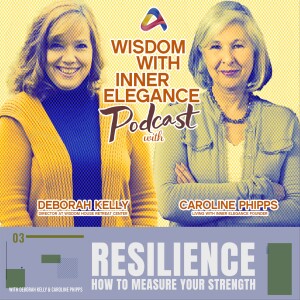
Wisdom With Inner Elegance Series
Resilience
How to Measure Your Strength
Welcome to an enlightening episode of the Wisdom with Inner Elegance Roundtable Series. Join Caroline Phipps, founder of Living with Inner Elegance, and Deborah Kelly, Executive Director of the Wisdom House Retreat and Conference Center, as they delve into the crucial topic of resilience in today’s chaotic world. This episode explores how resilience is no longer just about bouncing back but about adapting, transforming, and reflecting on your inner self.
Caroline and Deborah discuss the increasing fears and uncertainties people face due to rapid global changes, ageing, and personal life shifts. They emphasize the importance of community strength, sharing heartfelt stories of how resilience can be drawn from within and supported by connecting with others. Together, they explore the spiritual crisis facing many and how reflecting on one’s purpose and choices can lead to inner growth and development.
Throughout the discussion, they highlight inspiring narratives, including the redemption story of John Devine G. Whitfield, a wrongfully incarcerated man who harnessed his inner resilience to transform his life even while in prison. His journey exemplifies the power of a positive mindset and choice.
Caroline and Deborah also address the societal pressures that challenge the resilience of younger generations, urging a focus on genuine fulfillment over superficial achievements. They stress the significance of surrounding oneself with resilient and supportive people and how shared stories and communities play a vital role in encouraging this strength.
As the conversation unfolds, listeners are invited to reflect on their own strengths and to foster a communal atmosphere that uplifts and empowers. The hosts extend a warm invitation to future events at the Wisdom House Retreat, promising transformative experiences aimed at enhancing personal growth and inner elegance.
Caroline Phipps
Living With Inner Elegance
carolinephipps.com
Deborah Kelly
Wisdom House Retreat and Conference Center
wisdomhouse.org
May 22, 2025
May 22, 2025
22 min
Aired on May 22, 2025
In this electrifying episode of the Up and Running Morning Show on 98.1 KZE, host Rick and Caroline Phipps, founder of Living with Inner Elegance, share profound insights on resilience. Caroline engages the audience with an essential topic: the importance of resilience amidst life's challenges, such as balancing work and family, managing financial uncertainties, and caring for elderly parents.
The show's highlight is the inspiring story of Divine G. Whitfield, an incredibly talented actor and a founding member of Rehabilitation Through the Arts (RTA). Wrongfully incarcerated for 25 years, Divine used the power of the arts to cultivate resilience, eventually helping others behind bars and advocating for justice. He shares his journey of finding purpose, evidenced by obtaining degrees and mentoring fellow inmates.
Through Caroline’s conversation with Divine, listeners learn invaluable life lessons. Resilience, as Divine describes, begins from within and is sustained by making conscious, positive choices regardless of circumstances. His remarkable story is a testament to pursuing your passions and giving back, no matter the odds.
Listeners are captivated by Divine's post-incarceration journey, a second chance at life that led him to tour the world with Lil Wayne and earn an Oscar nomination for his screenplay, 'Sing Sing.' Caroline and Rick delve into the broader implications of resilience, as Caroline encourages individuals to focus on their unique strengths and extend kindness, asserting that these intentional choices have profound life-altering impacts.
Tune in as Caroline provides practical tools and strategies to build resilience and extend an invitation to experience her life coaching expertise. With tales of resilience, redemption, and the human spirit, this episode leaves listeners inspired and empowered to face their own challenges with grace and determination.
May 18, 2025
May 18, 2025
9 min
Aired on May 18th, 2025
Resilience
How to Measure Your Strength
In this thought-provoking episode, Caroline Phipps dives deep into the transformative power of resilience, exploring its significance in creating a just and peaceful world. Caroline shares her relationship with John Divine G. Whitfield, an Oscar-nominated screenwriter and a beacon of resilience, who shares his inspiring journey from wrongful incarceration to international recognition.
The episode unpacks Divine's life story, highlighting how he overcame a 25-year sentence for a crime he did not commit, pursued higher education, authored books, and fought tirelessly for justice, both for himself and for others entangled in the justice system. His experiences at Sing Sing prison, including his involvement with Rehabilitation Through the Arts (RTA), underscore the critical role of the arts in rehabilitation and resilience-building.
Caroline proclaims the essence of resilience, emphasizing constant reflection as a tool for growth, the importance of cultivating a strong sense of self, and the impact of understanding one’s unique strengths. They explore the nuanced challenges to resilience, from fear of others' opinions to toxic relationships, and the necessity of nurturing resilience to lead a productive life.
Listeners will be inspired by Divine's embodiment of resilience and the powerful message that what we give to the world returns manifold. Through Divine’s story, this episode illustrates the potential of resilience to not only transform individual lives but also contribute to societal change, urging listeners to nurture their own resilience for a brighter future.
Caroline Phipps
carolinephipps.com
Click to Watch this Podcast on YouTube
Substack

May 2, 2025
May 2, 2025
27 min
Aired on May 2, 2025
Welcome to the "Wisdom with Inner Elegance Roundtable Series," where hosts Deborah Kelly, Executive Director of the Wisdom House Retreat and Conference Center, and Caroline Phipps, founder of Living with Inner Elegance, take you on an enlightening journey in these turbulent times. This episode explores how individuals worldwide unite against injustice, inspiring a global movement of peace and community despite the chaos.
Caroline shares her observations on the growing phenomenon of people coming together, transcending specific causes, and advocating for one another in peaceful resistance. This global solidarity is analyzed through both scientific and spiritual lenses, touching upon Isaac Newton's laws of motion and the philosophies of karma and Christian teachings.
The episode delves into the power of truth, the contagious nature of courage and kindness, and the role of technology in mobilizing communities worldwide. Historical anecdotes highlight how figures like Mahatma Gandhi used non-violent resistance to inspire mass movements and challenge powerful empires.
Listeners are encouraged to embrace their power and live intentionally, fostering unity and empathy. The discussion highlights the simplicity of truth and the exhausting complexity of sustaining untruths, offering insights into the importance of standing up for justice and equality.
Don't miss the chance to join Caroline Phipps for an inspiring live program at Wisdom House on May 13th, and explore more resources on living with inner elegance at carolinephipps.com. Stay connected with Wisdom House at wisdomhouse.org for updates and inspiring programs to uplift your spirit.
Apr 24, 2025
Apr 24, 2025
18 min
Aired on April 24, 2025
Welcome to another enlightening Up and Running Morning Show episode on 98.1 KZE. In this engaging conversation, host Rick chats with the insightful Caroline Phipps, founder of 'Living with Inner Elegance.' Caroline brings her wealth of knowledge on truth, peace, and community, touching upon her own experiences and the enduring message of songs like John Lennon's "Give Peace a Chance."
Caroline illustrates powerful analogies, such as the art of horsemanship and the importance of not 'breaking the spirit,' both in animals and humans. This metaphor extends into human interaction, where cooperation and mutual respect replace force and dominance.
The conversation dives deep into historical figures like Gandhi, who exemplified the power of peace and truth against the odds, while encouraging listeners to explore the strength of aligning with truth and justice within their own lives.
Moreover, this episode highlights the significance of mindfulness in everyday actions and how changing our internal dialogue can result in profound external changes. With a delightful mix of humor and warmth, Rick and Caroline discuss her ongoing projects, including the 'Keeping Your Sanity' workshop and the 'Wisdom with Inner Elegance Roundtable' series in collaboration with Wisdom House Retreat and Conference Center.
Please tune in to discover how you can become a part of this growing community and explore the tools Caroline offers through her workshops and podcasts. Join us for a transformative journey of insights and wisdom coupled with a bit of laughter and joy.